
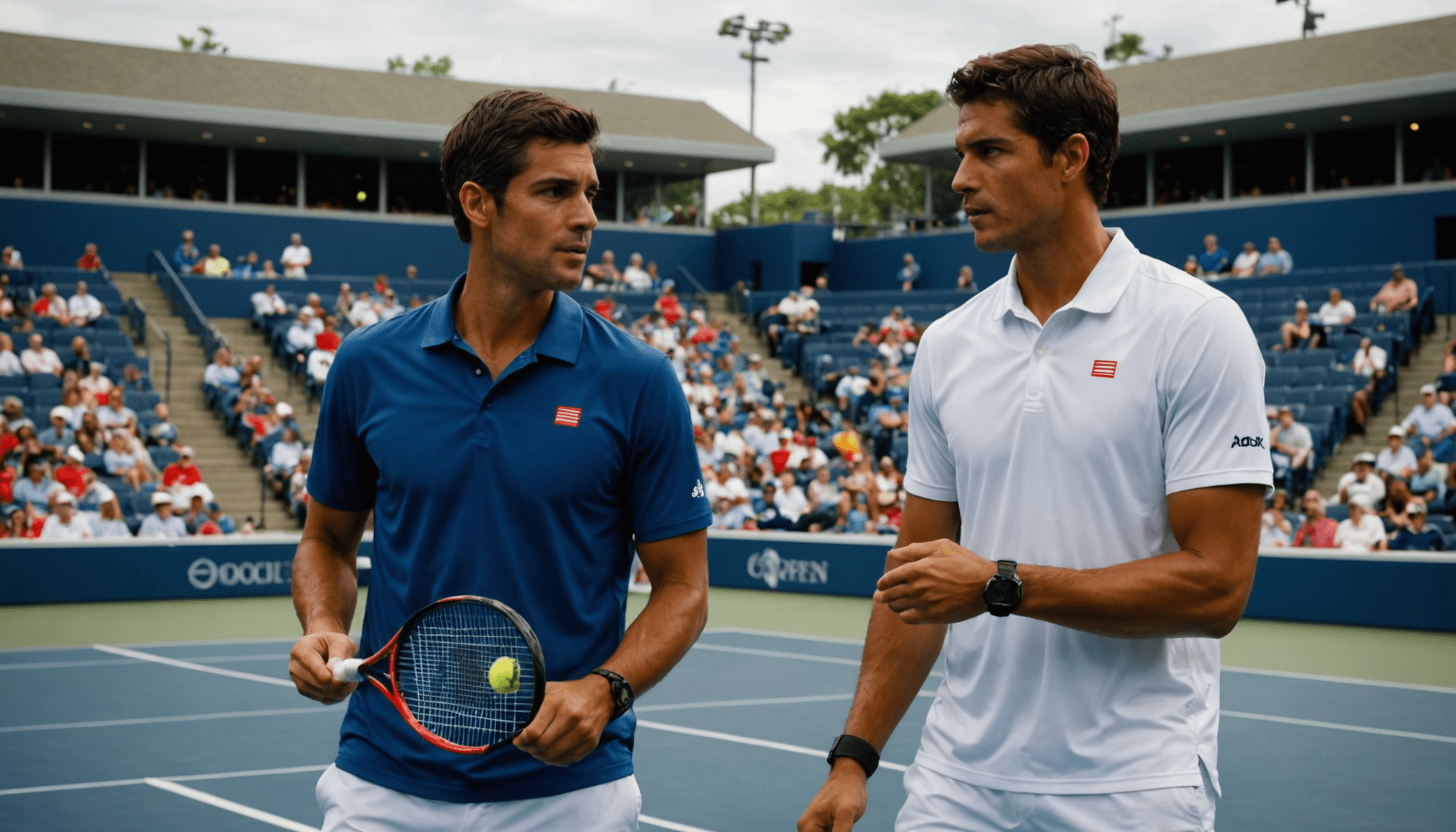
The US Open's mixed doubles competition gets underway today, bringing together an unlikely pairing that has generated considerable attention: Serena Williams alongside Carlos Alcaraz. The event, held at the USTA Billie Jean King National Tennis Center in Queens, New York, also features top-seeded duo Aryna Sabalenka and Novak Djokovic, while qualifying rounds for the men's and women's singles draws continue through the week.
For viewers hoping to follow the action without a traditional cable subscription, the options have multiplied in recent years, though navigating them still requires some planning. ESPN holds exclusive broadcast rights, meaning access depends on securing a streaming package that includes the network. Services like DirecTV, Fubo, Sling, and YouTube TV each offer different price points and bundling structures, and for those working remotely or traveling during the event, a reliable connection matters as much as the subscription itself - which is one reason many professionals now rely on a vpn for remote work to maintain secure, consistent access to streaming platforms and work tools alike while away from a home network.
Geo-Restrictions and the Role of VPN Technology
Streaming rights for large sporting events are typically sold on a territorial basis, which means a broadcaster with exclusive access in one country may have no rights elsewhere. This is where virtual private networks come into play. A VPN routes internet traffic through a server in another location and encrypts it along the way, which can make a connection appear as though it originates from that server's country rather than the user's actual location. For someone outside the United States trying to reach a platform like ESPN, or for a US-based viewer trying to access a service such as Australia's 9Now, this location-spoofing capability is often the only practical route to legitimate content that would otherwise be geographically blocked.
It's worth understanding what a VPN does and does not do in this context. It encrypts traffic between a device and the VPN server, protecting data from interception on public or unsecured networks, and it masks the originating IP address. It does not, however, grant free access to paid content - a valid subscription to the relevant streaming service is still required once the connection is established. Users should also be aware that broadcasters and streaming platforms often update their detection systems to identify and block VPN traffic, so consistent access isn't always guaranteed even with a capable provider.
Beyond the Court: A Field Stacked with History
First contested in 1881, the US Open ranks as the second-oldest Grand Slam event, trailing only Wimbledon, and like the Australian Open, it is played on hard courts rather than grass or clay. This year's singles fields include 17 former Grand Slam champions, with the American contingent leading all nations at 28 competitors in the main draw, including Coco Gauff, Jessica Pegula, Ben Shelton, and Taylor Fritz. The mixed doubles lineup alone reads like a reunion of generational talent, pairing Iga Swiatek with Casper Ruud, Jessica Pegula with Jack Draper, and Venus Williams with Alexander Bublik.
Privacy Considerations for Streaming Audiences
Beyond simple access, there are broader privacy implications worth considering whenever viewers connect to unfamiliar networks or third-party apps to watch live events. Streaming platforms collect viewing data, and public Wi-Fi networks at cafes, airports, or shared spaces can expose unencrypted traffic to anyone monitoring the same network. Encrypting a connection reduces this exposure regardless of whether geo-restriction is a factor. As live sports streaming becomes increasingly fragmented across competing platforms and regional licensing deals, the underlying question of who controls access to content, and who can see what viewers are watching, will likely remain a persistent undercurrent to how these events are consumed.