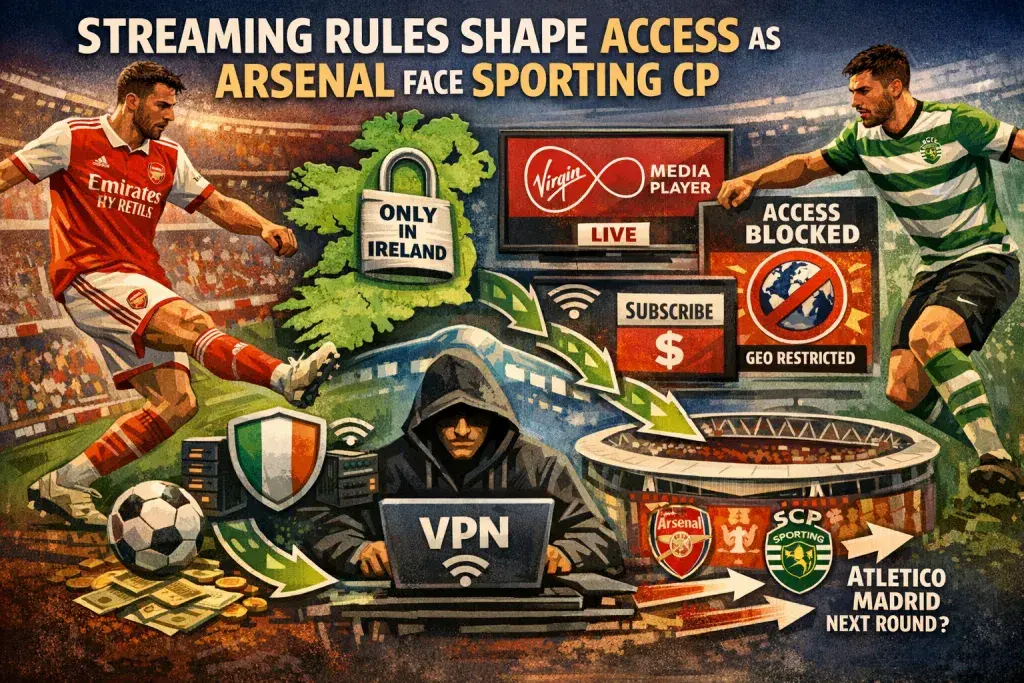
Arsenal’s second-leg meeting with Sporting CP arrives on April 15 at the Emirates, with kickoff set for 3 p.m. ET and progression still unresolved. For many viewers, the more immediate issue is not form or pressure but access: the fixture is available free through Virgin Media Player, a service limited to users in Ireland.
That restriction has turned a routine broadcast listing into a familiar digital rights story. Viewers outside Ireland are often pushed toward virtual private networks, or VPNs, to make a local stream appear accessible across borders.
Why a free stream is not equally available everywhere
Live broadcasting rights are sold country by country, and that fragmented system explains why one audience can watch at no charge while another may face a subscription wall or no legal option at all. Virgin Media Player’s offer reflects an Irish rights arrangement, not a global release. Geo-blocking is the mechanism that enforces those contracts by checking a user’s apparent location through an IP address.
This is now standard across film, television, and live events. It protects territorial licensing deals, but it also creates a two-tier viewing experience in which access depends less on interest than on geography. That tension has helped normalize VPN use among consumers who see the internet as borderless even when media law does not.
How VPNs fit into the viewing economy
A VPN routes internet traffic through a server in another country, making a device appear to be connecting from that location. In practical terms, connecting through Ireland can allow a viewer abroad to open Virgin Media Player as if they were there. The appeal is simple: broader access, privacy protection, and often a way around expensive short-term subscriptions.
Services such as ExpressVPN market themselves on speed, device support, and refund policies because buffering and compatibility matter as much as location switching. The context provided here points to servers in Ireland, apps across major operating systems, and a money-back guarantee as the key consumer selling points. Those are typical features in a crowded VPN market where streaming performance is often the main test users care about.
The legal and practical limits viewers should understand
Using a VPN is legal in many places, but that does not automatically mean every use complies with a platform’s terms of service. Streaming providers can restrict or suspend access if they detect location masking, and success is never guaranteed because platforms regularly try to identify VPN traffic. Consumers should also distinguish between legitimate VPN providers and low-quality services that may collect data aggressively or expose users to security risks.
Free VPNs are especially difficult to recommend for live video. They often cap bandwidth, offer fewer server choices, and can struggle under heavy demand. Paid providers with trial periods or refund windows are commonly presented as a safer short-term option for people trying to watch a single high-interest fixture without taking on a long subscription.
Why this fixture carries broader attention
The outcome will decide who advances to face Atletico Madrid, adding another layer of international interest to an event already drawing scrutiny from multiple markets. Arsenal bring a narrow first-leg advantage but also recent setbacks that have introduced uncertainty, making demand for reliable access even higher among viewers trying to follow a consequential night.
That combination of high stakes and fragmented media rights is now a defining feature of premium live broadcasting. The contest on the field matters, but so does the increasingly complex path required to watch it legally, affordably, and without technical friction.